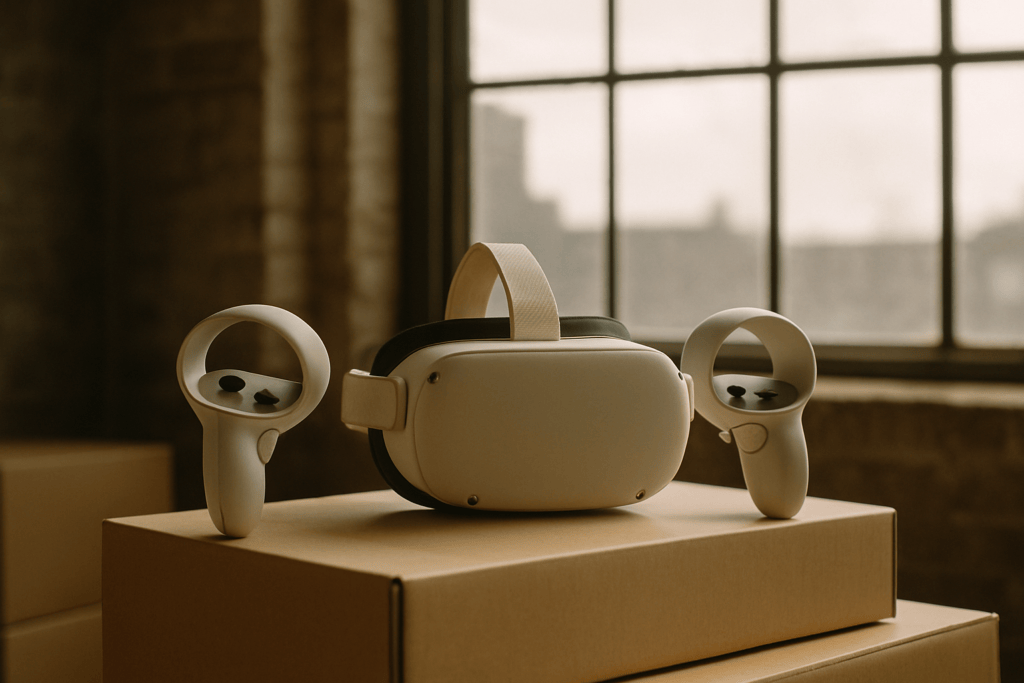
What Gamers Should Expect in 2026
A Leap Forward Since 2024
Since 2024, VR hardware has seen major upgrades across the board. Innovations in display technology, processing power, and motion tracking have redefined what immersive gameplay really means. Headsets are now far more self contained, with standalone models delivering performance previously reserved for high end, PC tethered setups.
Key developments since 2024 include:
Higher pixel density and resolution per eye for incredibly sharp visuals
Advanced inside out tracking no more external sensors needed
Faster wireless data streaming with improved latency control
Eye and hand tracking becoming standard, not a luxury
Immersion is the New Benchmark
In 2026, it’s not just about seeing a virtual world it’s about feeling like you’re truly there. Interactivity has become just as important as realism. Headsets are now expected to deliver both:
360 degree spatial awareness for better body movement tracking
Full hand gesture control without physical controllers in some models
Haptic feedback that simulates environmental impact and texture
Spatial audio that reacts dynamically to your position and movement
These features blur the lines between digital and physical, significantly amplifying player engagement and emotional intensity.
Must Have Specs for Serious Gamers
If you’re investing in VR primarily for gameplay in 2026, here’s what to prioritize:
Field of View (FOV): Look for at least 120° for expansive visuals
Refresh Rate: 120Hz+ is ideal for smooth, nausea free motion
Wireless Capability: The latest Wi Fi 6E and ultra low latency tech minimize tethers without sacrificing performance
Advanced Haptics: Seek out headsets with multi point haptic zones, including in controllers and headbands, for more sensory depth
Whether you’re into fast paced shooters or large scale RPGs, these specs ensure performance that keeps you immersed and competitive.
Meta Quest Infinity
Meta Quest Infinity ditches the old VR playbook. With full eye and hand tracking baked in, it reads body language like a second skin. There’s no external PC or base station to wrangle just put it on and go. Its built in chipset handles high end graphics with enough muscle for modern AAA titles, all while keeping things untethered. This is the headset for gamers who want immersion without wires, and performance without compromise.
Valve Index 2
Valve isn’t reinventing itself it’s doubling down on what hardcores love. The Index 2 pushes refresh rates higher and locks in precision tracking with near zero latency. It’s not shy about being built for the competitive and modding crowd. SteamVR isn’t just a store it’s an ecosystem, and Index 2 still rules it. If you’re into custom tweaks, homebrew content, and multiplayer precision, this is your rig.
Apple Vision Pro (Gaming Tier)
Apple’s Vision Pro Gaming Tier plays differently. It’s designed for those deep into the Apple world complete with seamless Arcade VR sync, insane resolution, and spatial audio that makes it feel like sounds live in your room. It balances ease and polish, especially for gamers who float between casual and serious gameplay. Think high end puzzle games, cinematic action, or crisp indie stories more vibe than volume.
Sony PlayStation VR3
The PS VR3 keeps it console clean, built to run perfectly with the PS5. It’s optimized to the core: OLED panels deliver pure blacks, while smart tracking sensors adapt to your room in real time. The headset feels like part of the system, not just an add on. With Sony’s steady stream of exclusive VR titles, it’s a go to for console first players who want VR that just works and works well.
Key Features That Matter

Resolution is no longer just a spec to brag about it changes how you play. 2K per eye delivers decent sharpness for most games, but once you try 4K per eye, it’s tough to go back. Edges are crisper, text is easier to read, and environmental detail pulls you deeper into the world. Is it always night and day? No. But in high fidelity games or long sessions, the difference becomes obvious fast.
Controllers have also matured. The industry is moving past basic trigger and thumbstick layouts. The best models now include finger tracking and pro grade haptics. That means you can pick up a virtual object with individual fingers or feel the crisp flick of a lightsaber strike in your palm. These upgrades might sound gimmicky, but when done right, they make interactions smoother and way more intuitive.
Wireless headsets continue to improve, but there’s still a trade off. Wireless gives you freedom to move, which matters for room scale games and avoiding cable spaghetti. Tethered setups still edge ahead in latency and visual quality usually by a hair, but it’s a hair some competitive players care about. Know what type of gamer you are before picking sides.
Comfort is non negotiable, especially if you play for hours. Some high end headsets now come with custom fit strap designs, balanced weight distribution, and breathable foam padding that makes a real difference. If you’re serious about VR, don’t settle for a headset that digs into your face or overheats in 30 minutes. Comfort keeps immersion alive and your neck intact.
Choosing the Right VR Headset for You
Start by asking yourself one thing: what matters most? If it’s portability, something like the Meta Quest Infinity offers freedom with zero wires and solid performance baked in. If you’re chasing lifelike graphics and don’t mind being tethered to a machine, the Valve Index 2 still rules that space. Content variety? Apple’s Vision Pro has depth in casual and indie titles, while PlayStation VR3 taps into console exclusives and big name franchises. And if price is the deal breaker, previous gen models still punch above their weight without draining your account.
Next, know your playstyle. Solo explorers looking for immersive campaigns might lean toward devices with robust storytelling libraries and cinematic visuals. Meanwhile, social players those diving into co op, VRChat, or online PvP should prioritize strong connectivity and intuitive interaction tools, like advanced hand tracking or spatial audio.
And then there’s timing. Should you upgrade now? If your headset struggles with newer games, lacks haptics, or gives you whiplash level frame drops, it might be time. But if your setup still runs smooth and supports current titles, wait and watch 2026 could bring modular add ons and platform shifts that change the game again.
(See also: VR gaming innovations for insights into next gen content shaping headset relevance.)
Future Proofing Your VR Setup
If you’re investing in a VR headset in 2026, think long term. Cross platform compatibility is no longer a bonus it’s a baseline. Whether you’re switching from PC to console or linking into mobile ecosystems, the best headsets now play nice with more than one platform. Meta and Valve are opening doors, while Sony is showing early signs of loosening its walled garden. The days of being locked to one library are fading.
Modularity is also stepping up. Swappable faceplates, sensor upgrades, and even controller customization let you scale performance without buying into a new rig every cycle. It’s becoming more like building a gaming PC: the core stays solid, but you tweak when the next big feature drop hits.
What’s driving all of this? Games and lots of them. Developers are finally going beyond tech demos. Full length titles, cross genre experiences, and VR first AAA franchises are on the 2026 horizon. Studios are committing, and it’s not just the big publishers indies are in too, thanks to more open SDKs and funding tools.
Lastly, the community’s stepping up where companies fall short. Open source support is fueling driver mods, indie dev kits, and entire games. The modding scene isn’t just a nice to have; it’s become a core component of VR’s growth. If your headset has a strong dev and mod community behind it, chances are it’s built to last.